Brain Integration Technique
Repattern the brain for greater ease, clarity, and function.
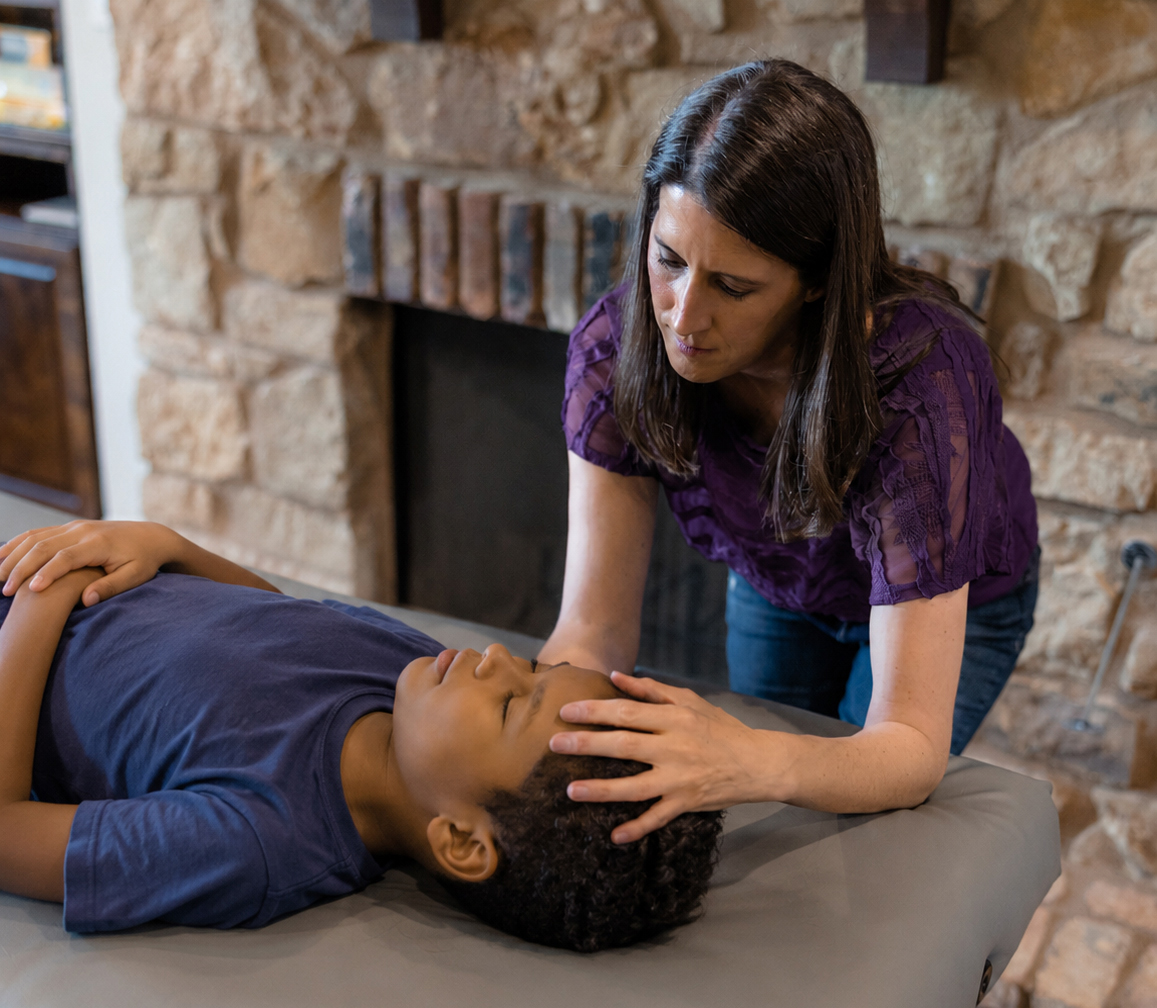
Brain Integration Technique is a gentle, non-invasive approach that works with the brain’s natural capacity to change. Using muscle testing, acupoints, and light touch, it helps establish more integrated neurological pathways for learning, focus, emotional regulation, coordination, and everyday function.
Not sure where to begin? A free consultation is a no-pressure place to start.
Ready for support? Schedule an in-person session.
Who may benefit
If school, work, or everyday responsibilities feel unusually difficult despite your best efforts, Brain Integration may be for you.
Brain Integration is particularly helpful for people dealing with the following issues.
Learning, Focus & Academics
- ADHD and dyslexia
- Reading and math
- Working memory
- Executive functioning
Emotional Regulation & Stress
- Anxiety and overwhelm
- Emotional regulation
- Persistent stress
- Confidence and resilience
Memory & Processing
- Brain fog
- Slow processing
- Visual and auditory processing
- Sequencing and directions
Coordination & Performance
- Balance and coordination
- Timing and movement
- Recovery after injury
- Performance under stress
A Parent’s Perspective
Why this story feels familiar to me
Sometimes the best way to understand Brain Integration is through the experience of a family who has lived through the frustration of watching a child struggle. I resonate deeply with this mother’s story because I have lived my own version of it.
There was a time when I, too, felt deeply worried about my own daughter’s future. Brain Integration became a turning point for us. The changes were so profound that I wanted to shout from the rooftops, “Why doesn’t everyone know about this?!”
Today, my daughter is an incredibly capable, well-functioning young woman, and her experience with this work is what eventually led me to train as a practitioner myself.
This mother’s journey from frustration and searching to hope feels deeply familiar to me, and offers a glimpse into why this work can mean so much to families who are still searching for answers.
The Brain Integration Technique Process
A structured protocol to build the brain pathways needed for learning, memory, emotional regulation, and performance.
The full process unfolds in three phases. Each phase contains specific steps that assess, repattern, strengthen, and integrate the systems the brain relies on for learning and everyday function.
Phase 1
Identify & Clear Interference
Begin by identifying what may be disrupting efficient neurological function.
Assessment
Establish a baseline for learning, memory, processing, visual tracking, coordination, and other relevant functions so we can see where the system is working well and where support may be needed.
Neurological Stressors
Identify and address sources of neurological stress that may be interfering with the brain’s ability to access information, regulate, or coordinate efficiently.
Phase 2
Strengthen Essential Brain Systems
Support foundational systems involved in communication, regulation, memory, motivation, and sensory processing.
Speech & Language Pathways
Strengthen pathways involved in speech, language processing, reading, comprehension, and expression.
Limbic System Foundations
Support foundational brain systems involved in stress responses, memory, motivation, emotional regulation, curiosity, and presence.
Visual & Auditory Processing
Strengthen the brain’s ability to process visual and auditory information needed for learning.
Phase 3
Bring the System Together
Connect the systems across the brain, then apply the new patterns in meaningful, functional tasks.
Cross-Brain Integration
Reinforce communication between brain regions and hemispheres so separate abilities can function together as a more coordinated whole.
Test Drive
Use reading, puzzles, balance, movement, memory, sequencing, and other activities to help the brain access and reinforce the newly integrated pathways.
What changes after integration
When the brain is integrated, everyday life feels different.
The goal is not to change who you are. It is to support more efficient access to the abilities, information, and potential already within you.
Sharper Focus & Memory
Improved comprehension, retention, mental clarity, and problem-solving make learning and everyday tasks feel easier.
Emotional Resilience
Greater inner stability makes it easier to navigate stress, recover from overwhelm, and respond to life with calm and clarity.
Creativity & Flow
Easier access to the brain’s resources allows creative thinking, free expression, problem-solving, and new ideas to flow more freely.
Physical Coordination
More integrated brain-body communication supports smoother movement, balance, spatial awareness, timing, and physical performance.
Deeper Relationships
Greater emotional regulation, awareness, and communication change the way you connect with family, friends, and coworkers.
Greater Confidence & Everyday Ease
When things that once required tremendous effort become easier, people feel more capable, independent, and confident navigating daily life.
Client Experiences
Real stories of change in learning, clarity, coordination, and confidence.
Nicole, age 10
“Katie’s Brain Integration work has been nothing short of life-changing for our family.” — Nicole’s mom
Before beginning Brain Integration, Nicole struggled with attention, school engagement, confidence, and overall well-being.
- Reading comprehension improved to 83% on a 5th grade level passage
- Working memory increased to 7 forward / 6 backward
- Cross-body coordination, eye tracking, attention, and confidence improved

Clara, age 15
“Clara is a totally different child this year compared to last year. She is thriving at school, both academically and socially.” — Clara’s mom
Before Brain Integration, Clara struggled with slow processing speed, test anxiety, and social confidence.
- Reading comprehension improved from 45% to above 90%
- Working memory increased to 7 forward / 6 backward
- She earned straight A’s and no longer needed her IEP accommodations

Char, age 80
“Life is easier. It’s like I have a little helper. Figuring out stuff is easier. Like I have a backup energy.” — Char
Before Brain Integration, Char experienced challenges with cognitive clarity, coordination, visual tracking, and confidence.
- Reading comprehension improved from 50% to 95%
- Working memory increased to 7 forward / 6 backward
- Eye tracking, coordinated movement, confidence, and self-trust improved

Frequently asked questions
Before you schedule
What happens during a session?
For much of the process, clients remain fully clothed and lie comfortably on a treatment table while I repattern and rewire specific brain pathways using muscle testing, acupoints, and light touch. Other parts of the process are more active and may involve balancing, walking, eye-tracking activities, puzzles, reading, memory tasks, sequencing, or other activities used to assess and “test drive” the changes.
Lying down is not required if it is uncomfortable, and children do not need to remain perfectly still for the entire session. I always strive to meet children where they are at. I provide toys in the office, and parents are welcome to bring non-electronic toys that help their child feel comfortable while I work.
Do you use needles or electrodes?
No, brain integration is completely non-invasive. Most people find it relaxing.
How many sessions will I need?
The amount of Brain Integration work needed depends on your goals and how much of the protocol is appropriate for you. Some focused concerns may require only a few hours, while completing the full Brain Integration protocol typically takes approximately 12–20 hours.
The work can be paced in whatever way makes the most sense for you. Most local clients choose shorter sessions of about an hour at a time, while clients traveling from farther away may prefer longer, more intensive days to accomplish several hours of integration at once. Clients can generally complete anywhere from 1 to 6 hours of Brain Integration in a day, which means the full protocol can sometimes be completed over just a few concentrated days.
We’ll determine a realistic pace based on your goals, how you respond to the work, and what feels manageable for you.
When might I notice changes?
Some clients notice changes in focus, clarity, emotional state, coordination, or stress response during or soon after a session. For others, changes become more apparent gradually as they return to school, work, relationships, and everyday activities and notice that tasks are accomplished with greater ease than before.
Can Brain Integration be done virtually?
Some early portions of the Brain Integration protocol can be offered at a distance, including work related to allergies, neurological stressors, and the limbic system. However, work involving the eyes, ears, balance, and other aspects of neurological function is considerably more effective—and sometimes only practical—when the client is physically present. Completing the full Brain Integration protocol therefore requires significant in-person work.
What if my child will not sit still?
I always strive to meet children where they are at. Children do not need to remain perfectly still or lie down for the entire session. I provide toys in the office, and parents are welcome to bring non-electronic toys that help their child feel comfortable while I work.
Will I need to do exercises or homework at home?
No. The rewiring and repatterning of the brain takes place while clients are in the office and does not require additional exercises or homework at home.
How much does a session cost?
Session and package pricing varies depending on the type and level of support you choose.
Can Brain Integration replace medical, psychological, or educational care?
No. Brain Integration is complementary support and is not a substitute for medical, psychological, psychiatric, therapeutic, or educational care. I encourage clients to continue working with appropriate licensed professionals and educators when needed.
Your next step can be simple
Curious whether Brain Integration may be a fit?
Share what you or your child has been experiencing, and we can explore whether this approach may be a helpful next step.